A Blurry World

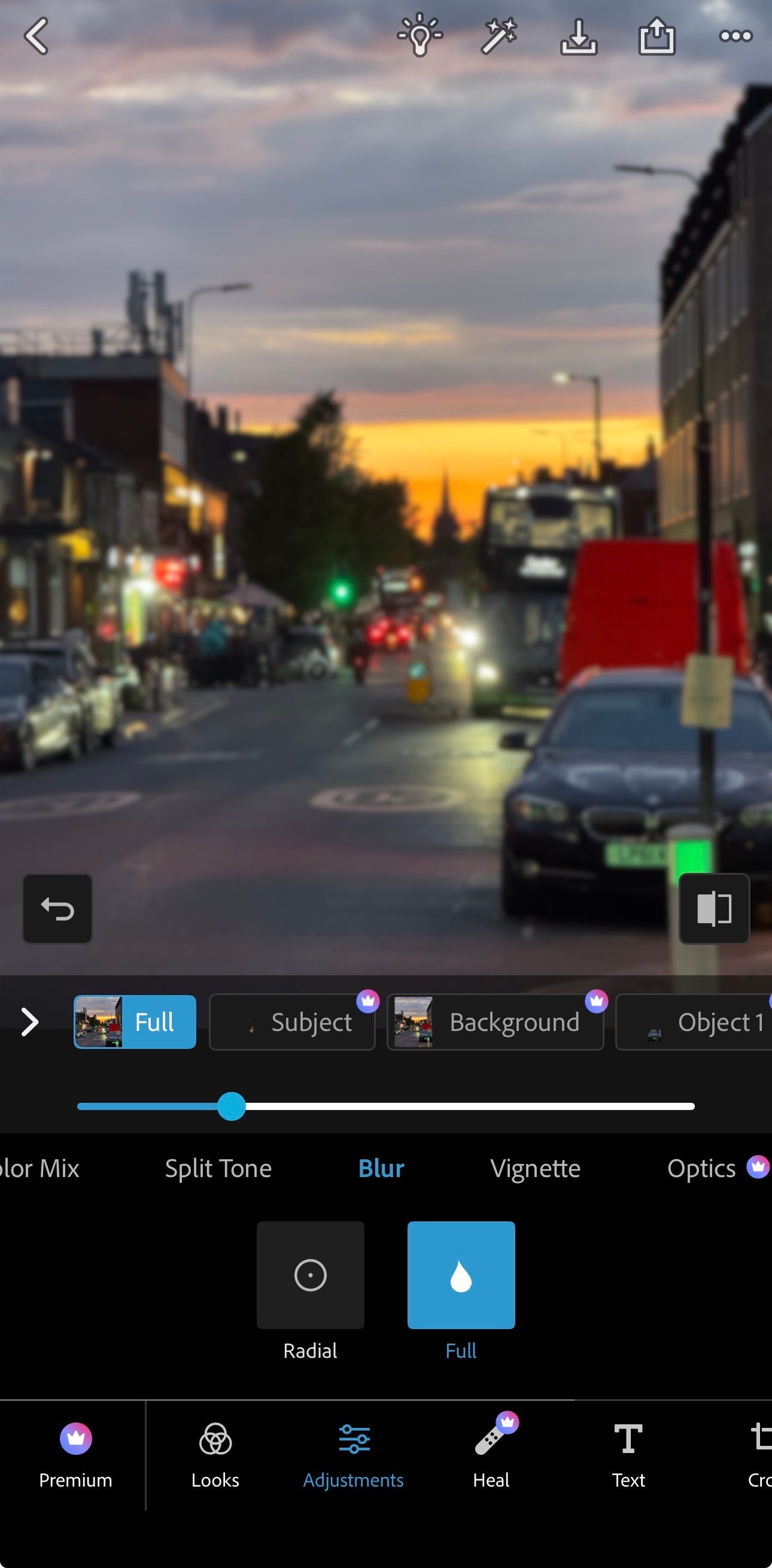
I was inspired by one of my friends to not wear vision correctives. My uncompensated eyesight was mildly bad, in that benign where edges softened and details faded, but things came into a sharp focus at arm’s length, close enough where it mattered.
Since youth I have worn contact lenses. I did not find them uncomfortable, and putting them on every morning had become a second nature to me, part of the sacred routine which included brushing my teeth, getting dressed, and wondering what to eat for breakfast.
I chose an inauspicious day for such an endeavor, for I spent a great deal of time squinting at signs as I travelled from one place to another. But I found myself in the throes of a spiritual experience, one which reminded me yet again of the joys of staying alive.
The easiest conclusion to draw from all of this is a critique of the modern cult of efficiency, which demanded, amongst other things, a maximalism in perception. Never mind the fact that it was more chaff for an already overburdened mill, that the exhausted psyche was no longer keeping up with the overflow of information and protesting the incessant and often deliberate bombardment of our senses. In refusing to allow the contents of the mind to be dictated, it is a rebellion.
But one of the first things that happens when you defocus your vision is that you notice more. Sure, individual details begin to fade into the background, but in its place comes a keen awareness of form, structure, and relations. To use an overused metaphor, the forest is seen for the trees. People, minus the distracting details of the faces themselves, are seen for their poise, action, and the context in which they exist.
This last point merits some explaining. Because things lose the ability to “jump out” at you, there is an egalitarian and evenhanded sense of the entire scene. Details are often ugly, but the whole is often more than the sum of the blemishes. I’ve always wondered whether sensory perception was a blessing or a prison, and I always came to the conclusion that there was more that was ugly than that which was beautiful. Yet when viewed in defocus, the ugliness disappears, and a systemic, interwoven sense of beauty takes its place.
Shorn of the specific descriptive functions which attention to detail demands, perception becomes evocative. I’ve never understood architecture much until today, but this time I could SEE the interplay of styles, function, and attribute personality, emotion, and character. But when your dominant mode of interacting with the world becomes evocative, the emotions come alive, and the world along with it.
Also fading away into the background is the sense of being watched, judged, and scorned. It is a lot of mental energy to feel observed when you can’t even make out faces, and after a while my brain seems to have given up on it, and let the creative and unfiltered me take free rein. In the same way raves, desire, and freedom tend to happen well after nightfall, the loosening grip of the panopticon allows for the lifting of the strictest of censorships, that of the self.
What is left is a certain form of God complex, a true experience of what it means to be free, perceptive, and powerful. Becoming at once the main character and the narrator of your own story, and reclaiming mastery over the world around you.
This is what we live for.